
The Story
Where this work comes from
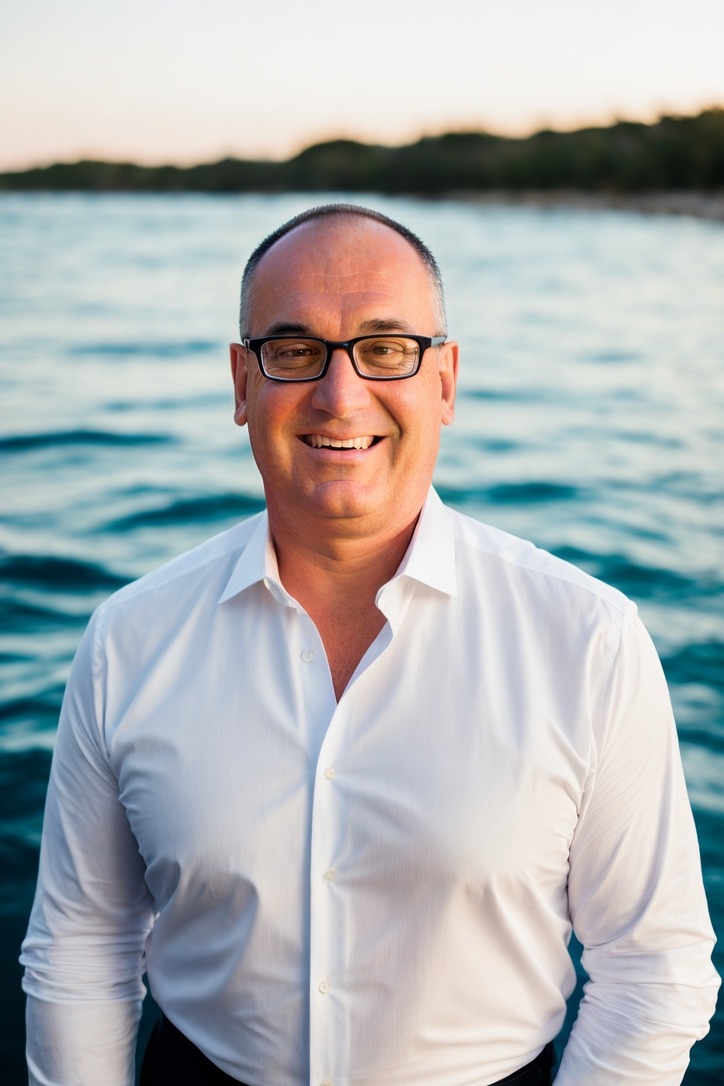
Michael is the Founder and CEO of Linke Leadership, a strategy and leadership consultancy that helps individuals and organisations close the gap between where they are and where they need to be. Linke Leadership works with leaders at all levels, through coaching, mentoring, and practical frameworks, to make leading organisational change more effective in an AI-enabled world.
That work is grounded in thirty years of executive leadership experience, including fifteen years as a CEO. He led Recreational Aviation Australia (RAAus), the national peak body for light and recreational aviation, and RSPCA ACT, the Territory's leading animal welfare organisation, as Chief Executive Officer, and held senior executive roles in the disability and public sectors. Those environments, each with its own regulatory pressures, stakeholder complexity and cultural dynamics, shaped a leadership philosophy that is practical, direct and built around what actually works in context. He navigated the Global Financial Crisis while leading RSPCA ACT and led major strategic and cultural transformation programs at both organisations.
In 2026, Michael completed Harvard Business School's Advanced Management Program (AMP 210), widely regarded as one of the most rigorous and selective executive leadership programs in the world. Delivered on Harvard's Boston campus across multiple modules between January and May 2026, the AMP brings together a small global cohort of senior executives and CEOs for an intensive, case-method curriculum spanning enterprise strategy, financial stewardship, global leadership and large-scale organisational transformation. Michael's study included dedicated coursework in Financial Accounting, AI for Business, and Leading Change and Organisational Renewal, and he was awarded a scholarship through the Disability Leaders Institute and the Social Impact Hub in recognition of his leadership as a disabled executive. The AMP deepened his thinking on leading organisational change, strategic renewal, and the dynamics that determine whether strategy translates into results. The frameworks he studied, including the Congruence Model, Innovation Streams, Dynamic Conservatism, and Strategic Gap Analysis, are applied directly in his client work, not left in a classroom.
His career has covered strategy development and execution, governance and board relationships, risk management, and the sustained work of building culture and capability. He also serves as a Non-Executive Director, which keeps him close to governance from the board's perspective as well as the executive's. He understands that strategy without the capability and culture to execute it is just a document. The hardest part of leadership is rarely the decision, it is the implementation.